
Are we at the point where generative AI can help with making craft patterns? Maybe!
The claim
A few weeks ago, a friend sent me an Instagram reel that claimed to show an app that creates amigurumi patterns from photos of real-life objects.
I was skeptical. When I started using image-generating AI (DALL-E and Midjourney), cute crocheted items were some of the first things I had them make. They got the vibe right, but the details were physically impossible. And trying to get an actual pattern out of any of the AIs? Not happening.
However, it’s been a couple of years, which is pretty much millennia in AI-time. So maybe things had changed enough for this to be plausible?
The app
I downloaded the app* and tried it out. It definitely does not deliver on the promise. There’s not a way within it to take a photo and end up with a workable crochet pattern.
* I’m intentionally not naming the app here because a) I’m not here to shame anyone but also b) they’re intentionally misrepresenting their functionality and I’m not going to reward that with more promotion.
However, it does do some interesting things. Primarily, it breaks down the process of generating an AI pattern into smaller steps that are likely to be more successful, particularly for less-experienced AI users.
The first step is writing a prompt for the AI to generate an image of a crocheted object. This is something you can definitely do on your own, but the app interface adds options (for yarn weight and type of object, among others) that make it easier to end up with a good prompt than starting from scratch. The app also is definitely adding some broad instructions (about it being crocheted and the background, for instance) behind the scenes.
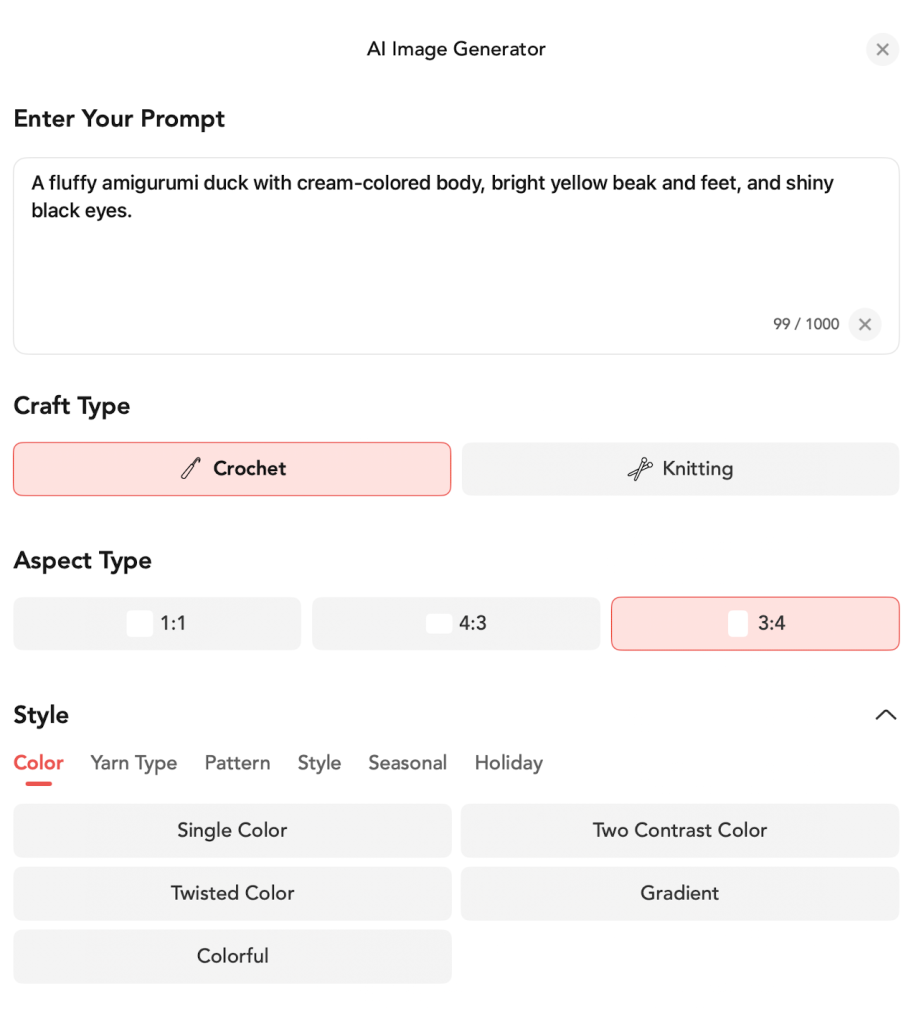
The result of this step is that the prompt is sent to an AI, which returns an image. The image it came up with was pretty good:
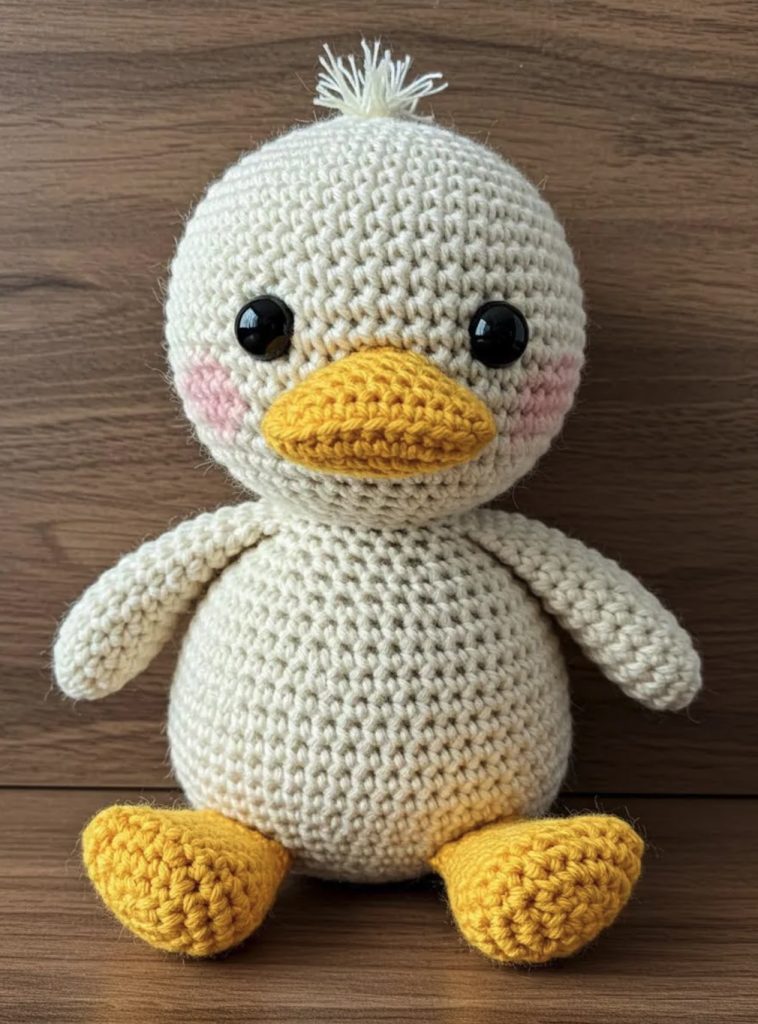
Everything there looks possible, at least conceptually!
After that, it sends the image to a language-generator AI (presumably along with some additional instructions) and returns the “pattern.”
I use the term “pattern” loosely because, although it looks pattern-ish at first glance, once you look at the details, it becomes clear you already need to know how to make a project like this in order to follow the instructions.
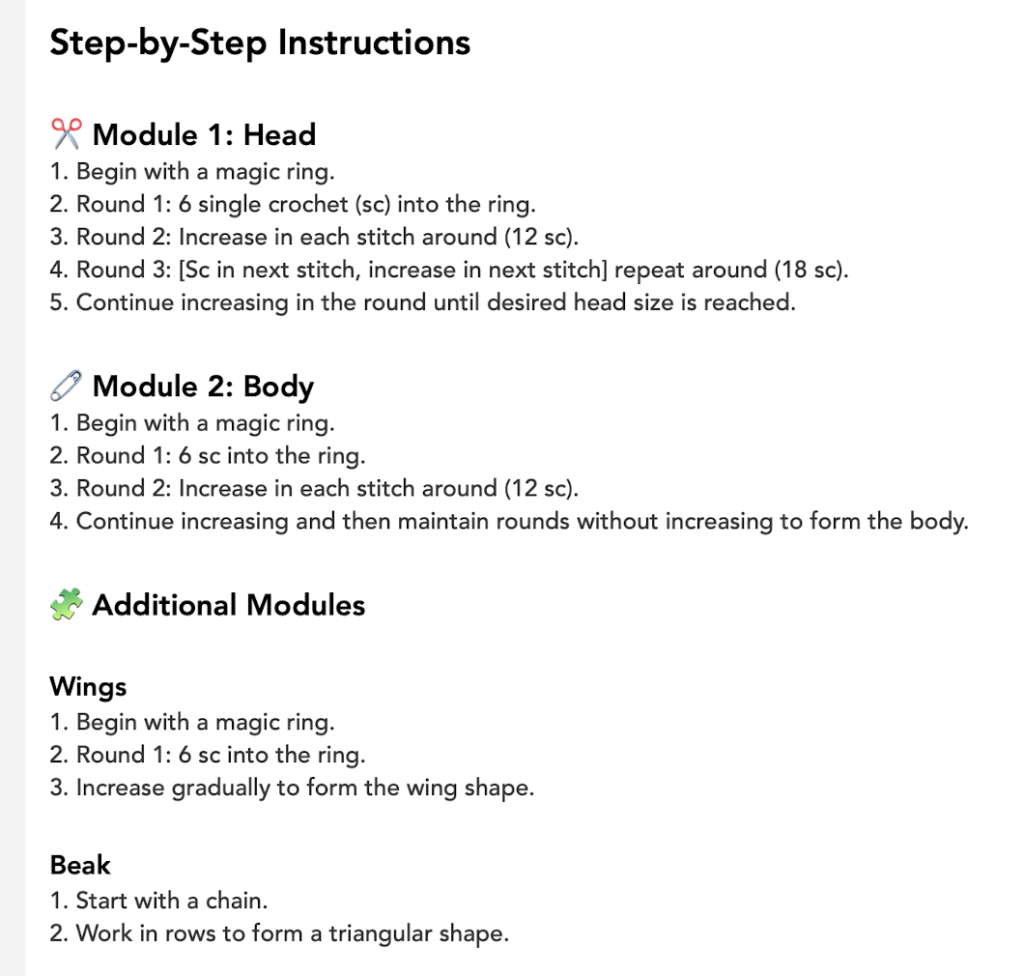
My favorite is the instructions for the beak:
- Start with a chain.
- Work in rows to form a triangular shape.
🤣
It’s in that awkward zone of “only helpful if you already know enough to not need the help.” Not particularly useful. But it got me thinking…
The extension
As of this writing, ChatGPT-5 is relatively new, and it does a much better job than previous versions when it makes sense to break down a request into smaller parts, solve those, and then pull it back together into a cohesive response. This is “orchestration” in AI terms, and exactly the kind of thing that might help with a pattern like this.
This also feels like the kind of thing that AI will eventually be good at. There are thousands of patterns available online that can be used in the training data, and amigurumi often follows fairly standard structures. The pattern-following nature of generative AIs means that, at some point, it will likely be good a making literal patterns.
So I tried it. I fed ChatGPT-5 a basic prompt and the generated image, and this is an excerpt of the pattern it returned:
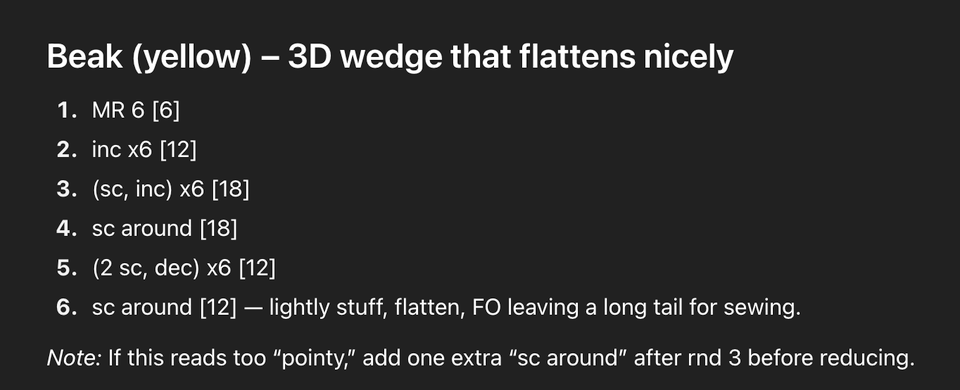
This is much better. There are still oddities (the beak in the image is clearly not just a circle around a magic ring, and the time to add suggestions about what to do after round three would be… after round three) but it’s at least a workable pattern.
So naturally, I decided to work it.
The experiment
My goal was to follow the pattern fairly strictly when possible. I wanted to see if it turned out (at all) and how closely it resembled the AI image. I did use different sized eyes (because I had them on hand) and didn’t stuff all the extremities, but in terms of the stitching, I followed the instructions exactly.
Mostly.
There was one area that gave me trouble, and that was the feet. It is, not coincidentally, the only part of the pattern that involves any shaping beyond evenly-placed increases and decreases for circular parts.
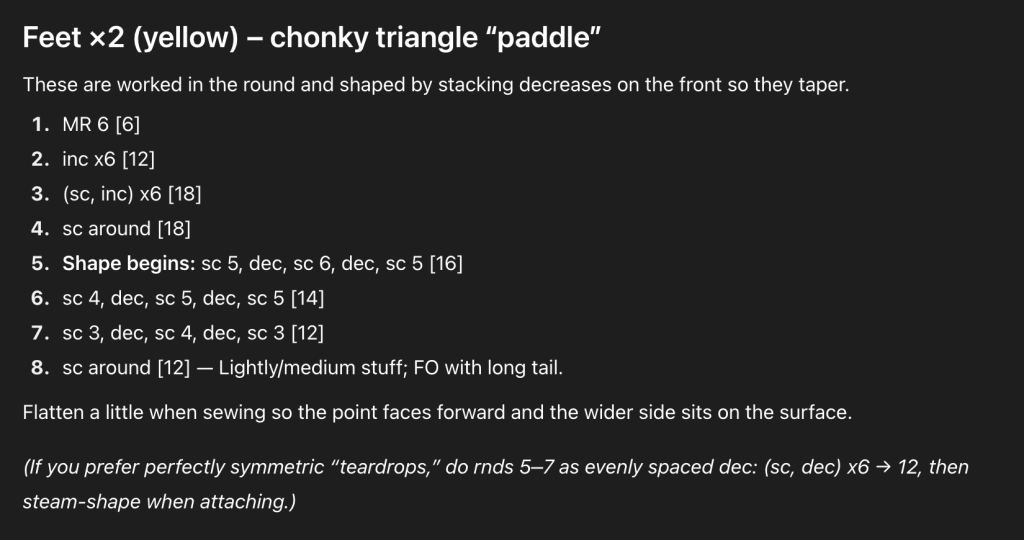
I didn’t catch it on my initial glance-through, and it took me a while even when working it to figure out the issue (I am not a pattern tech editor for many, many reasons!). But if you look at rounds four and five, they don’t work together.
Round four is correct. However, if you do the math for round five and count the stitches needed for the decreases (5+2+6+2+5), you’ll realize that you need 20 stitches for round five to work out… and there are only 18.
This points to the biggest weakness of this technique. ChatGPT is a large language model. Even as OpenAI adds orchestration to better handle diverse tasks, the tool is, at its heart, a language prediction machine. It currently does not have true math and logic ability, only mimicry.
So even though this is pretty simple math, it’s not equipped to do the math. Unless the specific case of these exact numbers comes up frequently in the training data, it’s going to follow the pattern of ___ single crochets, a decrease, ___ single crochets, a decrease, ___ single crochets—but totally guess at what those fill-in-the-blank numbers should be. And in this case, it guessed wrong.
In practice, for me, this was not a big deal. Once I realized what was going on, I fudged it, as is my deeply ingrained tendency. However, this would potentially be a show-stopper for someone less experienced (or less flippant).
That said, the final result was cute, if not exactly like the AI image in a lot of the details:
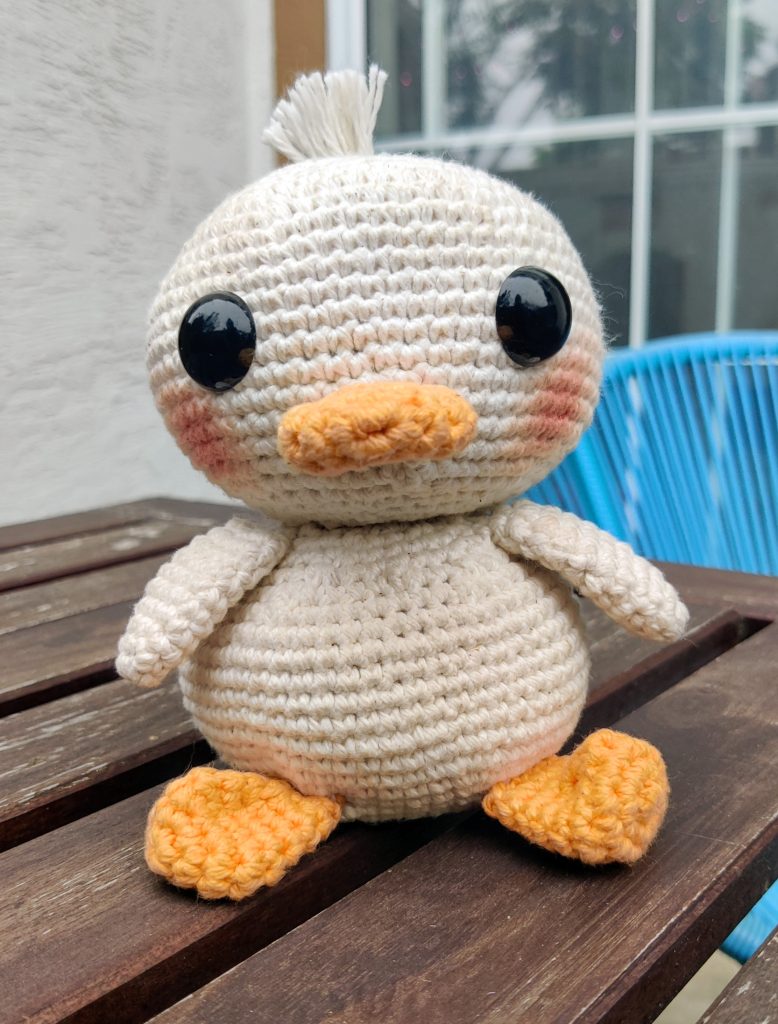
(Also, I need to get some softer pink blush!)
The recommendations
This was a fun experiment, and it’s interesting to see the progress that AI models are making. For now, they are still no substitute for an actual pattern designer, thoughtfully crafting each curve. But they have a lot of potential, and I thoroughly enjoy using them for the image-making part as a way of collaborating with my own creativity.
For the short-term in particular, this will increase the necessity for trustworthy designers. I’ve been seeing loads of obviously AI-generated craft books on Amazon lately, and they are universally given dismal reviews—though the folks who are churning them out must get some sales before the reviews reveal how terrible the “content” is, because they are making a lot of them.
If you’re looking for a pattern and you’re already experienced with making amigurumi, it’s fun to work with AI to see what you can make. I wouldn’t bother using a specialty app for the purpose; I’d just go straight to the AI. (Let me know if you want instructions for this!)
If you’re not experienced, I’d highly recommend starting with something like a Woobles kit. They’re expensive, yes, but thoughtfully designed from the ground up to help you succeed at crochet. Trying to learn crochet while also following unreliable instructions is a recipe for frustration.
If you can’t afford Woobles, get some “beginner yarn” and find a highly-rated book or pattern on Ravelry. Get that experience under your belt with a few successful amigurumi and then have fun wandering into the crochet end of the AI world.
Leave a Reply